
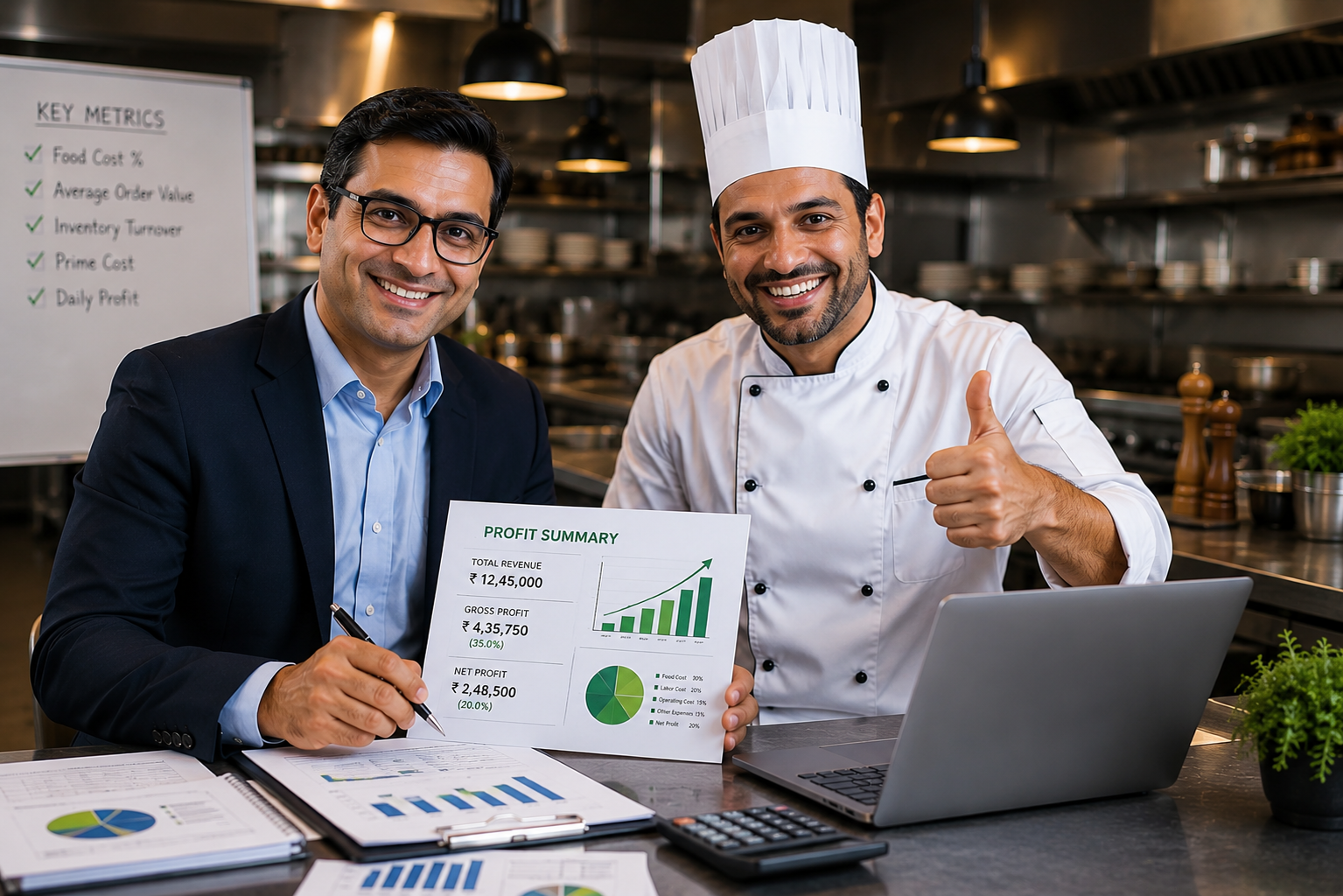
Running a restaurant in 2026 is no longer just about great food and customer service. Today, successful restaurants use restaurant accounting services, food cost analysis, restaurant MIS reports, inventory tracking, and data dashboards to make smarter business decisions.
The most profitable restaurants don’t rely on guesswork.
They track numbers daily:
✔ Food Cost Percentage
✔ Average Order Value (AOV)
✔ Inventory Movement
✔ Daily Profit Reports
✔ Cash Flow
Because every restaurant owner eventually asks:
“Sales toh aa rahe hain… but profit kahan ja raha hai?”
The answer is usually hidden in your data.
What is Data-Driven Restaurant Management?
Data-driven restaurant management means using financial and operational insights to improve decisions and profitability.
Instead of assumptions, restaurants use numbers to:
- Improve restaurant profit margins
- Reduce food wastage
- Increase cash flow
- Optimize pricing
- Improve operational efficiency
Restaurants using restaurant accounting and MIS reporting systems are growing faster than those relying on manual tracking.
Key Restaurant Metrics That Increase Profit
1. Food Cost Percentage (The Biggest Profit Driver)
Food cost is one of the most important metrics in restaurant accounting.
Formula:
Food Cost % = (Ingredient Cost ÷ Total Sales) × 100
Ideal range: 28-35%
High food cost often means:
❌ Over-portioning
❌ Wastage
❌ Inventory leakage
❌ Pricing mistakes
Smart restaurants perform restaurant food cost analysis regularly to identify hidden losses.
2. Average Order Value (AOV)
Formula:
AOV = Total Revenue ÷ Number of Orders
Increasing AOV helps restaurants increase profits without adding more customers.
Ways to improve AOV:
✔ Combo meals
✔ Upselling desserts
✔ Add-ons
✔ Smart menu pricing
A small increase in AOV can create a significant impact on monthly profit.
3. Inventory Tracking
Poor inventory management silently reduces profit.
Smart restaurants track:
✔ Daily stock movement
✔ Inventory turnover
✔ Expiry and spoilage
✔ Purchase patterns
Strong inventory tracking reduces wastage and improves margins.
Related read: Inventory Management Secrets for Restaurants
4. Daily Restaurant MIS Reports
Most restaurants review reports monthly.
Smart restaurants review daily restaurant MIS reports.
Restaurant MIS reporting helps owners:
✔ Track daily profit and loss
✔ Detect problems early
✔ Make faster decisions
✔ Improve financial control
This is one of the most overlooked tools in restaurant bookkeeping services.
How Restaurants Use Data to Increase Profit
Tracking numbers alone is not enough.
Successful restaurants use data to:
Identify low-profit dishes
Using menu engineering, restaurants analyze item-wise profitability and focus on high-margin products.
Reduce food wastage
Data reveals:
- Overproduction
- Spoilage
- Portion mismatch
Less waste = more profit.
Improve pricing
Instead of guessing prices, restaurants use:
- Cost per dish
- Customer behavior
- Sales trends
This creates better restaurant profit margin improvement.
Manage cash flow
Many restaurants fail because of poor cash flow, not low sales.
Smart businesses monitor:
✔ Daily inflow vs outflow
✔ Vendor payments
✔ Credit cycles
✔ Profit trends
Related read: Cash Flow Management for Restaurants
Tools Smart Restaurants Use in 2026
Modern restaurants increasingly rely on:
- POS systems
- Inventory management software
- Restaurant MIS reports
- Data dashboards
- Cloud accounting systems
But software alone doesn’t create results.
Insights do.
Frequently Asked Questions
What is restaurant MIS reporting?
Restaurant MIS reporting tracks operational and financial performance including sales, profit, inventory, and expenses.
What is a healthy restaurant food cost percentage?
Most restaurants aim for approximately 28-35%.
How often should restaurants review data?
Daily tracking is ideal. Monthly reviews often identify issues too late.
Can cloud kitchens use restaurant accounting services?
Yes. Cloud kitchen accounting services help track profitability, inventory, reconciliations and financial performance.
Final Thoughts
Restaurants in 2026 are not winning because they serve more food.
They’re winning because they understand numbers better.
Food + Experience + Data = Profit.
If you’re not tracking your numbers, you’re not managing a restaurant business – you’re taking a risk.
Paperwork helps restaurants with:
✔ Restaurant MIS reporting
✔ Food cost analysis
✔ Restaurant bookkeeping services
✔ Cloud kitchen accounting
✔ Profit tracking
✔ GST & compliance
Make smarter decisions. Let your data work for you.
7 Tips to Save a Failing Restaurant.How Outsourcing Accounting Work Helps Businesses?